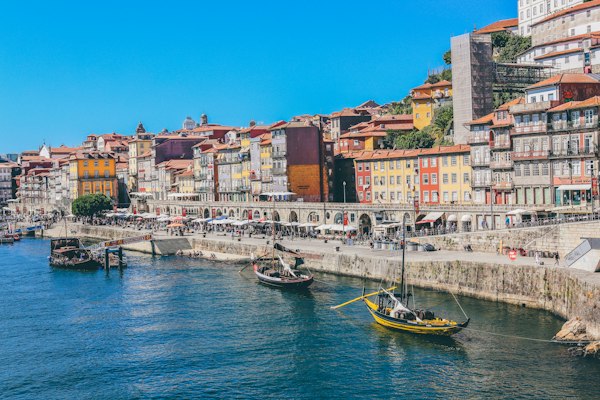
The Lisbon secondary landscape
Greater Lisbon hosts around 12 international secondary schools as of 2026, concentrated along two clearly defined corridors. The Cascais line, running west along the Tagus estuary through Carcavelos, Estoril and Cascais, holds the heritage cluster that includes St Julian's School, St Dominic's International School and Carlucci American International School of Lisbon. The northern Belas and Sintra suburbs hold the newer growth wave, with PaRK International School, Redbridge School and TASIS Portugal serving the families who arrived through the Golden Visa programme and the Non-Habitual Resident tax regime between 2017 and 2024.
The dominant sixth form qualification in Lisbon is the IB Diploma, offered by roughly eight schools including St Julian's, St Dominic's, the Lisbon branch of TASIS, and the Diploma stream at Oeiras International School. A Levels are available at PaRK and a small number of British curriculum boutiques, paired with IGCSE at Year 11. Carlucci American International School is the only school in the city running the US pattern at scale, with Advanced Placement courses through Grade 12 and a Common Application support office for US-bound leavers. For the curriculum-level view see our Lisbon IB hub, British curriculum hub and American curriculum hub.
Fees across the qualification routes
Lisbon sits at the lower end of European international school pricing, with secondary tuition starting around EUR 9,200 at PaRK Belas and topping out near EUR 24,800 at the IB Diploma at St Julian's. The mid-market band, EUR 14,000 to EUR 19,500, covers Oeiras International, St Dominic's lower secondary and Redbridge sixth form. Capital fees of EUR 1,500 to EUR 3,000 apply at most schools, charged either as a refundable enrolment bond or a one-off levy. IB Diploma exam entries add EUR 1,000 to EUR 1,500 across Years 12 and 13 for a typical six-subject candidate.
The Golden Visa and Non-Habitual Resident regimes have meant that a large share of Lisbon international secondary families pay fees themselves rather than through an employer relocation package, which holds school pricing power below the European norm. The published Lisbon fees guide walks through the all-in cost-of-place arithmetic and the cost calculator covers the full Lisbon move including housing, NHR or the new IFICI replacement regime, and schooling.
IB Diploma, A Level or AP for your child?
Take our 5 minute school finder quiz. We shortlist three Lisbon secondary options based on your child's stage, your university plans and your budget.
Illustrative example schools
The four schools below are illustrative, not a ranking. Each runs an established secondary phase with a distinct qualification mix and serves a different slice of the Lisbon international family market.
St Julian's School Secondary in Carcavelos is the oldest international school in Portugal, founded in 1932, and is the dominant IB Diploma provider in Greater Lisbon. Diploma cohorts average above 36 points and leavers head primarily to UK, US and Dutch universities. The school combines a British primary stage with an IB-only secondary, a structure unique in the city.
Carlucci American International School of Lisbon in Sintra runs the only full US-pattern secondary in the city, delivering the American High School Diploma with Advanced Placement courses through Grade 12 and the IB Diploma as a parallel option for select students. The college counselling office places students into US universities at typical acceptance rates similar to strong US prep schools.
St Dominic's International School Senior in Sao Domingos de Rana is a Catholic-ethos school running PYP, MYP and IB Diploma. Smaller sixth form cohort than St Julian's and CAISL, with a strong continental European university destination mix and an emphasis on multilingual graduating profiles.
PaRK International School Belas is part of the larger PaRK group serving the newer northern Lisbon suburbs. Delivers IGCSE at Year 11 followed by A Levels at sixth form, with a fee point below the heritage Cascais line cluster. Useful for families who prefer the UK qualification pathway at a lower price band.
Where secondary families live
Secondary families in Lisbon distribute along the school commute geography rather than the central neighbourhoods favoured by primary families. The Cascais line corridor, particularly Carcavelos, Parede, Estoril and Cascais, anchors families using St Julian's, St Dominic's and TASIS. The train into central Lisbon runs every 20 minutes and the corridor is the densest expatriate neighbourhood in the country. Sintra and the adjacent Cacem and Belas suburbs host families using CAISL, PaRK and Redbridge, served by the Sintra commuter line and the A37 motorway.
The newer wave of arrivals through the Non-Habitual Resident tax regime tend to choose Oeiras and Algés for the combination of strong international school access, a riverside location and modern apartment stock at a discount to central Lisbon. American families servicing the embassy and tech multinationals along the Tagus right bank, including the Microsoft and Web Summit office cluster, sit in this corridor. For wider context see our Lisbon city hub, moving to Lisbon with kids and the primary schools hub for the preceding stage.
Admissions calendar and sixth form transfers
Lisbon international secondary admissions run on a slightly earlier cycle than the rest of Southern Europe because the popular Cascais line schools fill quickly. For September 2026 entry, applications opened in October 2025 and the main intake at Year 7 and Year 12 closed by mid-January 2026. Late-cycle places open intermittently through the spring as relocation timing shifts. Mid-year transfers up to Year 11 are accepted on a rolling basis subject to places, particularly at the newer Belas and Sintra schools that have grown capacity in line with NHR demand.
Sixth form transfers, into Year 12 for the first year of A Level or the IB Diploma, are possible at most schools but require subject-by-subject matching. After the October half-term, predicted grades and UCAS or Common Application references make transfers materially harder, and Year 13 transfers are effectively closed because the receiving school cannot issue a credible university reference. Families considering a transfer from another country mid-sixth-form should explore the editorial pick and the Lisbon IB ranking to identify which schools accept late starters.
Frequently asked questions
What secondary qualifications can my child take in Lisbon?
Lisbon international secondary schools offer the IB Diploma, A Levels and the US High School Diploma with AP, depending on the school. St Julian's and St Dominic's anchor the IB Diploma cohort. CAISL delivers the American Diploma plus AP. PaRK offers A Levels alongside IGCSE. Portuguese national qualifications, taken in parallel at some bilingual schools, sit alongside as a recognised route into both Portuguese and international universities.
How many international secondary schools are in Lisbon?
Around 12 international secondary schools operate inside the Greater Lisbon area in 2026, concentrated along the Cascais line and in the northern suburbs. About 8 of those run the full IB Diploma. Three deliver A Levels and one is a US-pattern American school running Advanced Placement courses through Grade 12.
How much does international secondary cost in Lisbon?
International secondary tuition in Lisbon ranges from EUR 9,200 per year at the lower mid-market schools to EUR 24,800 at the premium end. The IB Diploma typically sits between EUR 18,400 and EUR 24,800. A Level sixth form runs EUR 16,200 to EUR 21,500. Capital fees of EUR 1,500 to EUR 3,000 apply on top at most premium schools.
Can my child transfer mid-year into Lisbon secondary?
Mid-year transfers are possible at most Lisbon international secondaries up to Year 11 subject to places, with rolling enrolments accommodating Golden Visa and Non-Habitual Resident relocations. Year 12 transfers, into the first year of the IB Diploma or A Level, are difficult after October because subject choices and predicted grades are already in train. Year 13 transfers are effectively closed.
Is the IB Diploma in Lisbon recognised by UK and US universities?
Yes. UK universities accept the IB Diploma through UCAS with standard tariff conversions, and Lisbon IB schools issue UCAS predicted grades for January UK deadlines. US universities recognise the IB Diploma directly, with Lisbon schools running parallel SAT prep and counsellor-led Common Application support. Russell Group and Ivy-plus offers typically require IB 38 to 42 with HL subject alignment.